The right type of fabric can definitely make or break a project, something I’ve been reminded of over and over during my 40+ years of sewing. So before we start sewing the Tyri Tie-Neck Knit Blouse, we need to talk about the fabrics.
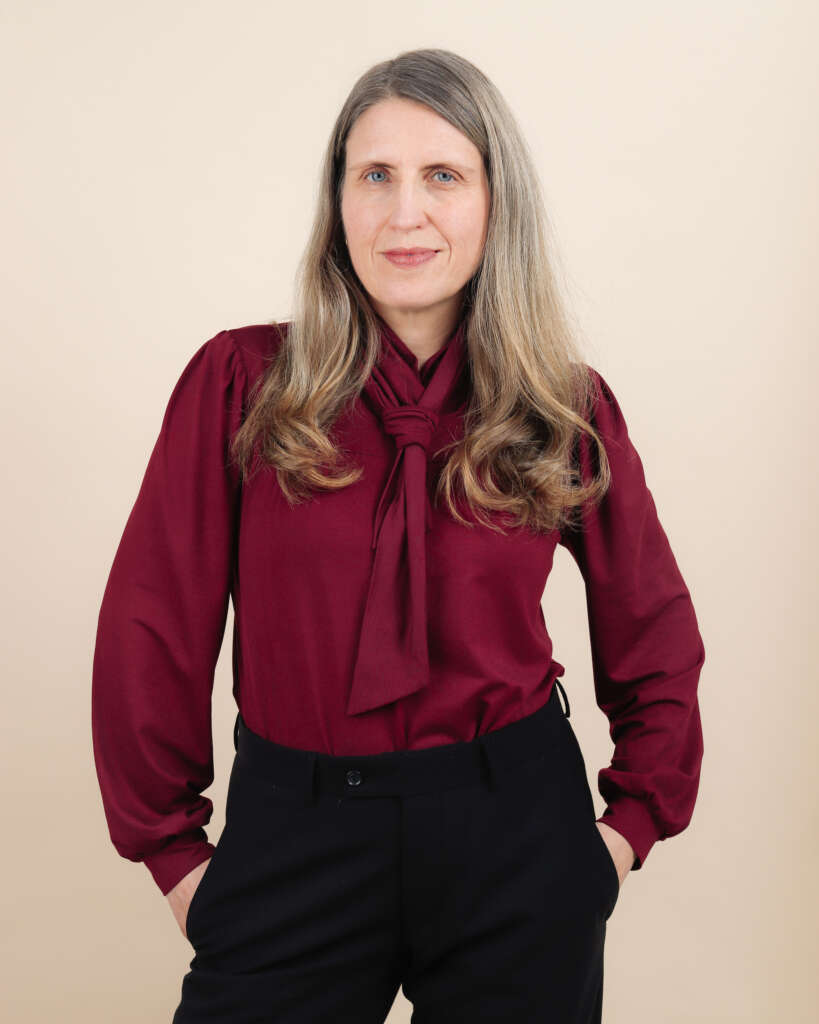
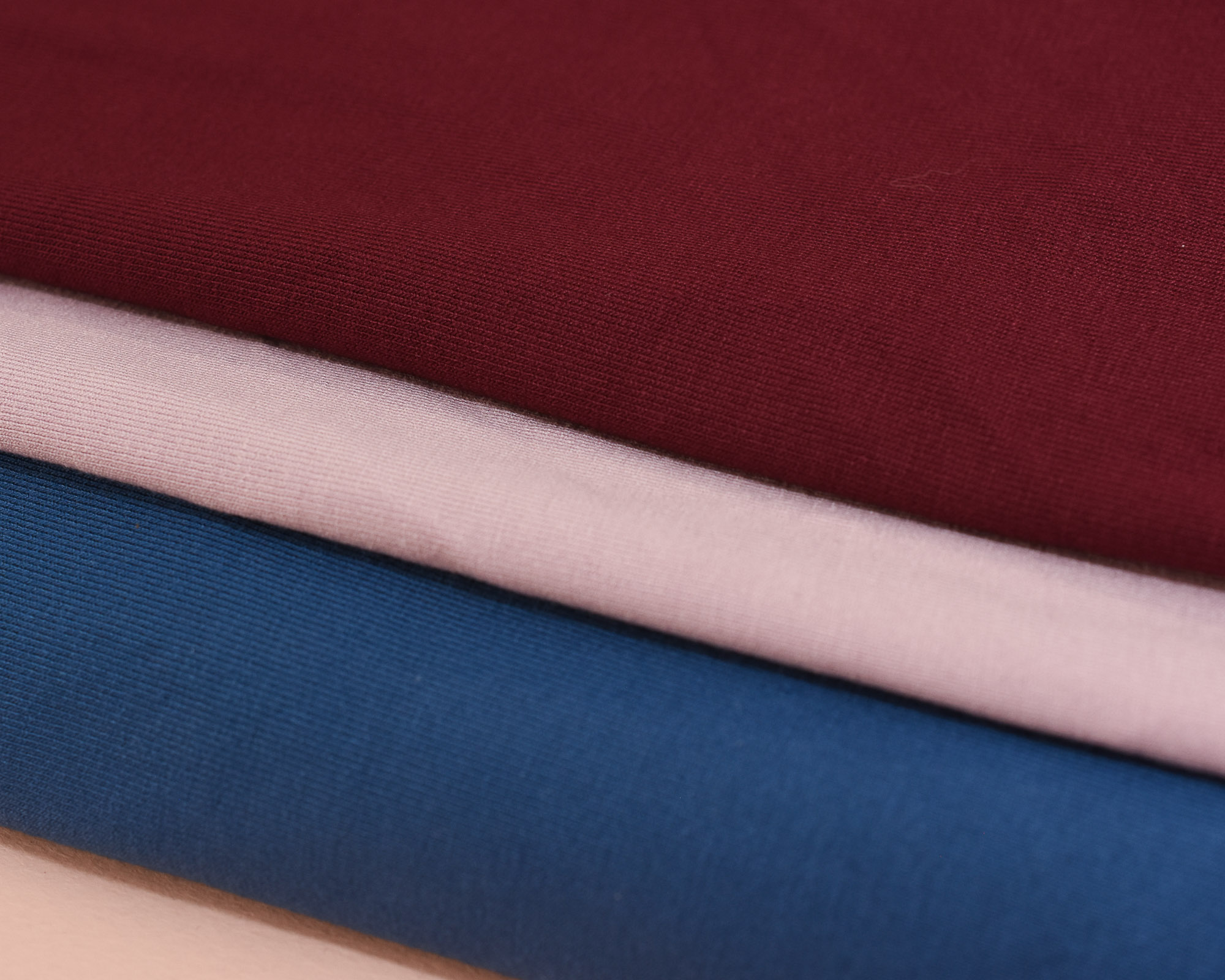
Tyri is designed for light-to-medium-weight jersey fabrics that have some softness and drape, while also having good recovery. As there are some elevated details on the blouse, you don’t want to use a fabric that grows just by looking at it!
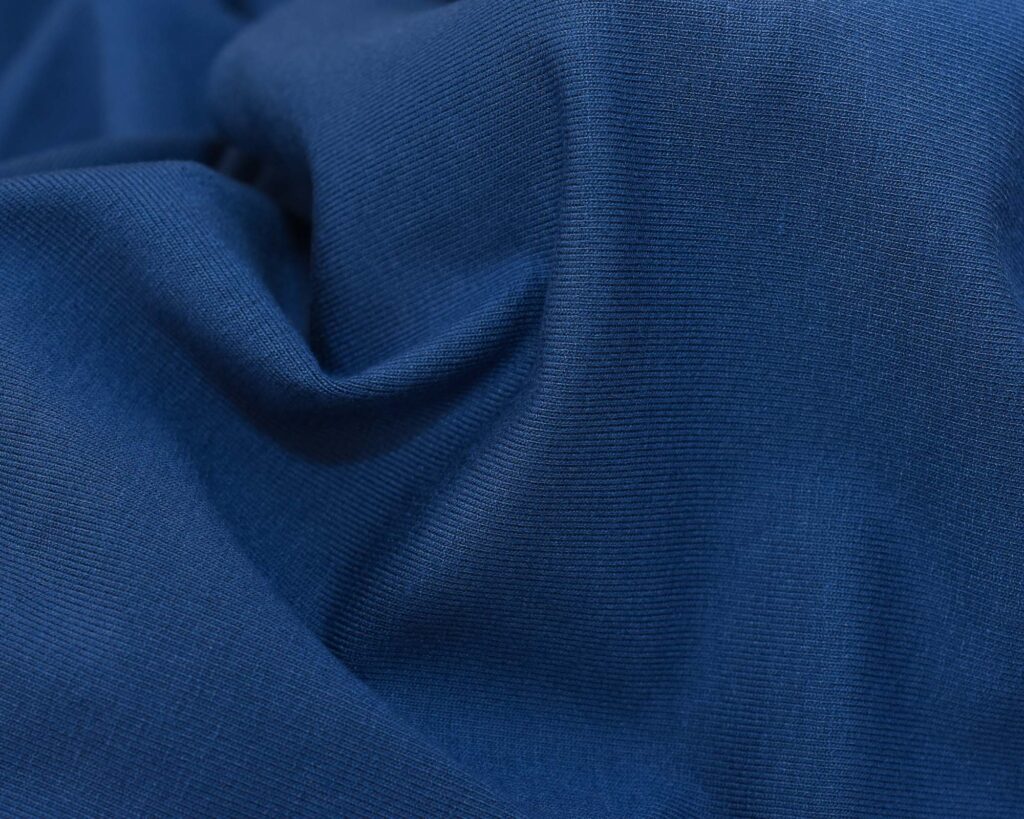
Suitable fabrics for the Tyri Blouse
- Rayon/viscose jersey
- Cotton jersey
- Tencel jersey
- Silk jersey
- Lightweight synthetic knits
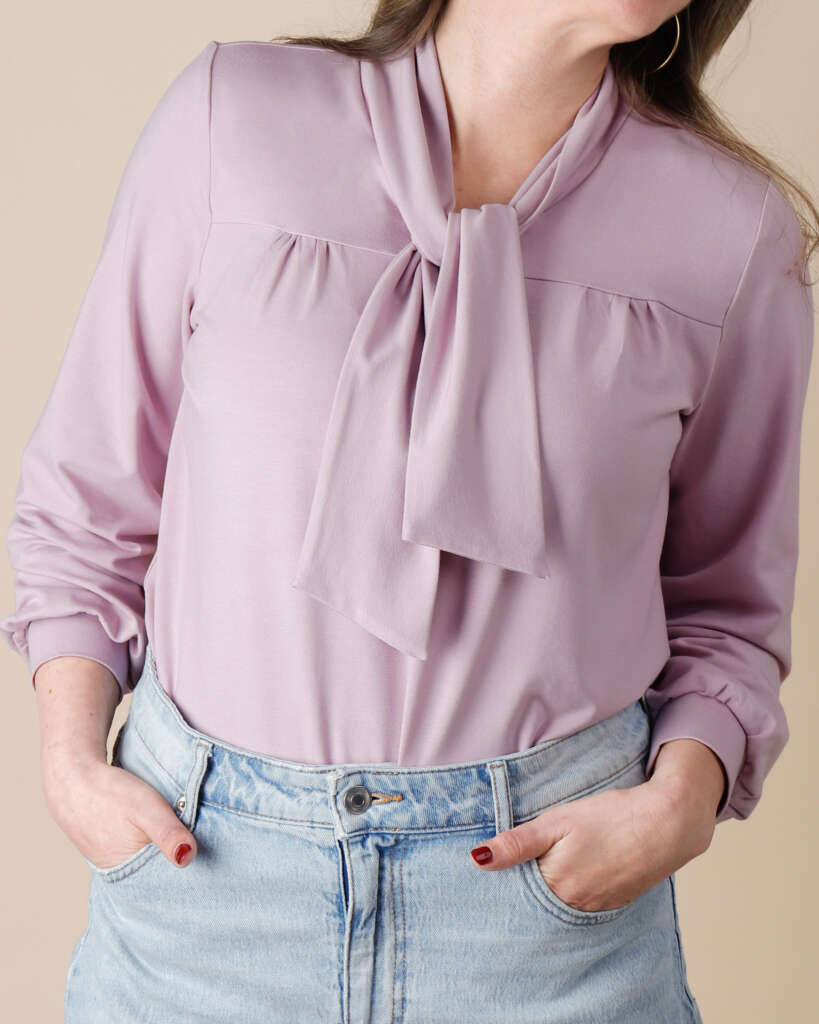
Fabrics to approach with caution
- Heavier knits
While a more stable cotton jersey can work, a too-heavy fabric will not create soft gathers, and will likely make the neckline and tie feel bulky too. - Very thin and supple knits (e.g. light bamboo jersey)
These are lovely to wear, but they will be too flimsy for this neckline style - Fabric with low recovery (i.e soft interlocks, pointelle and similar fabrics)
A bit of spandex is very helpful in this case
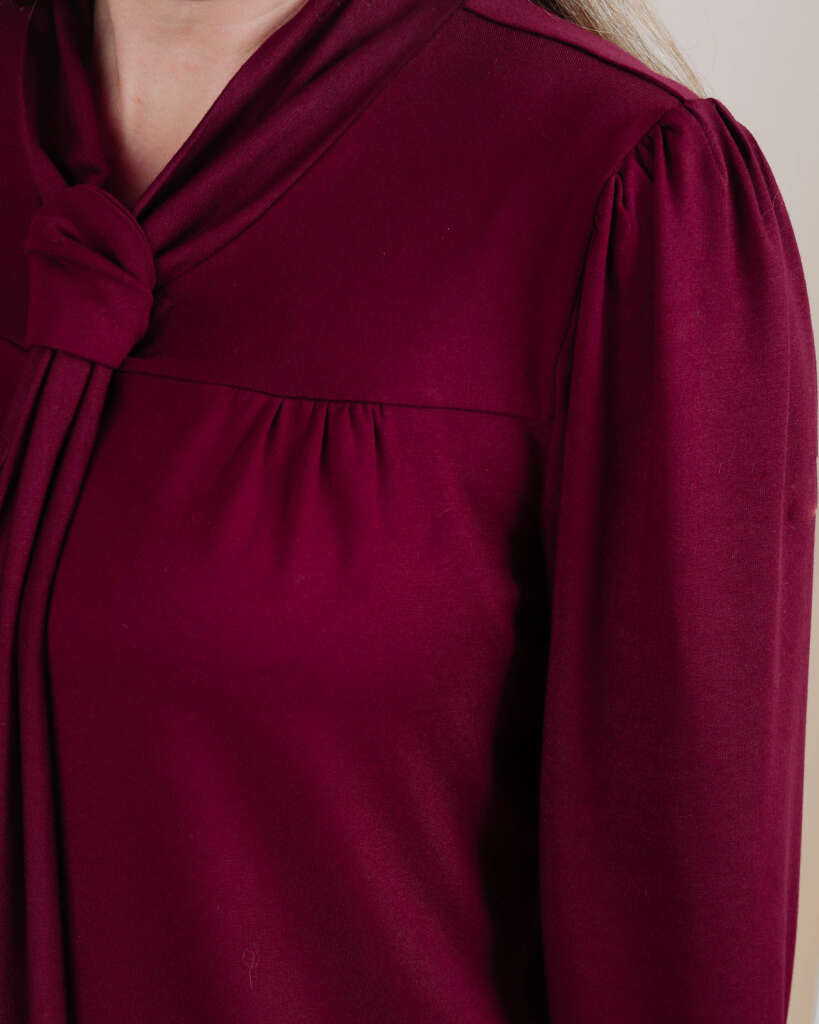
Getting the stretch right
Pick a fabric with at least 20% crosswise stretch. This ensures comfort and allows the blouse to move with the body. As Tyri has built-in ease, you don’t need a ton of stretch.
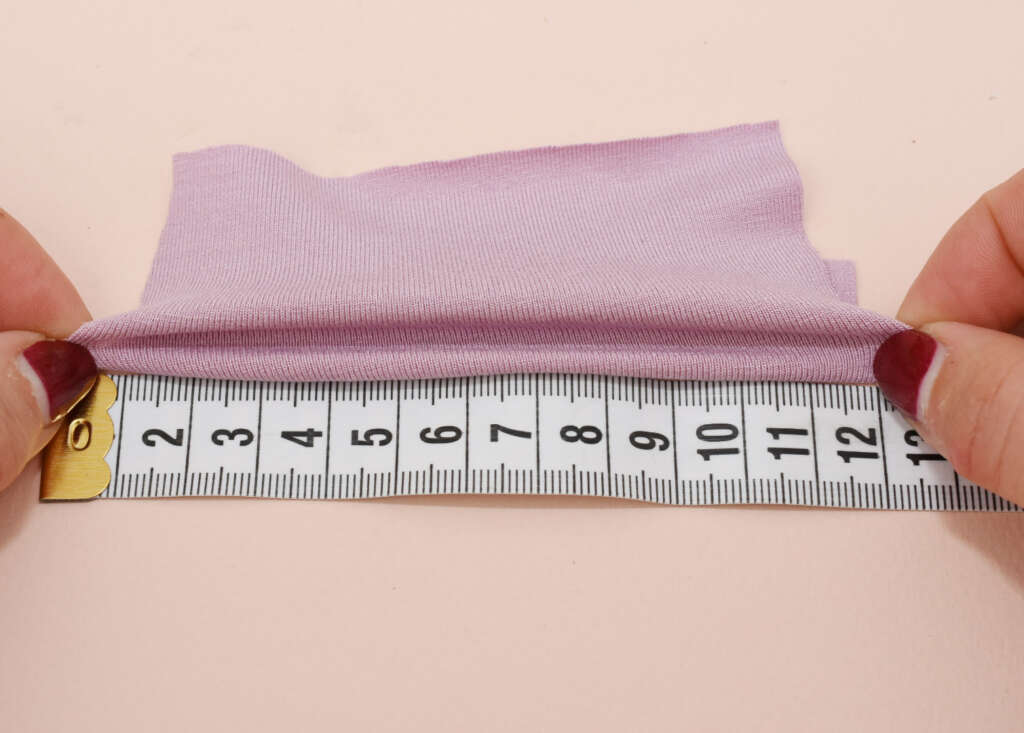
How to measure stretch
- Cut a 10 cm wide strip of fabric crosswise
- Stretch the fabric horizontally
- Measure how far it extends
If it stretches to at least 12 cm, it has around 20% stretch.
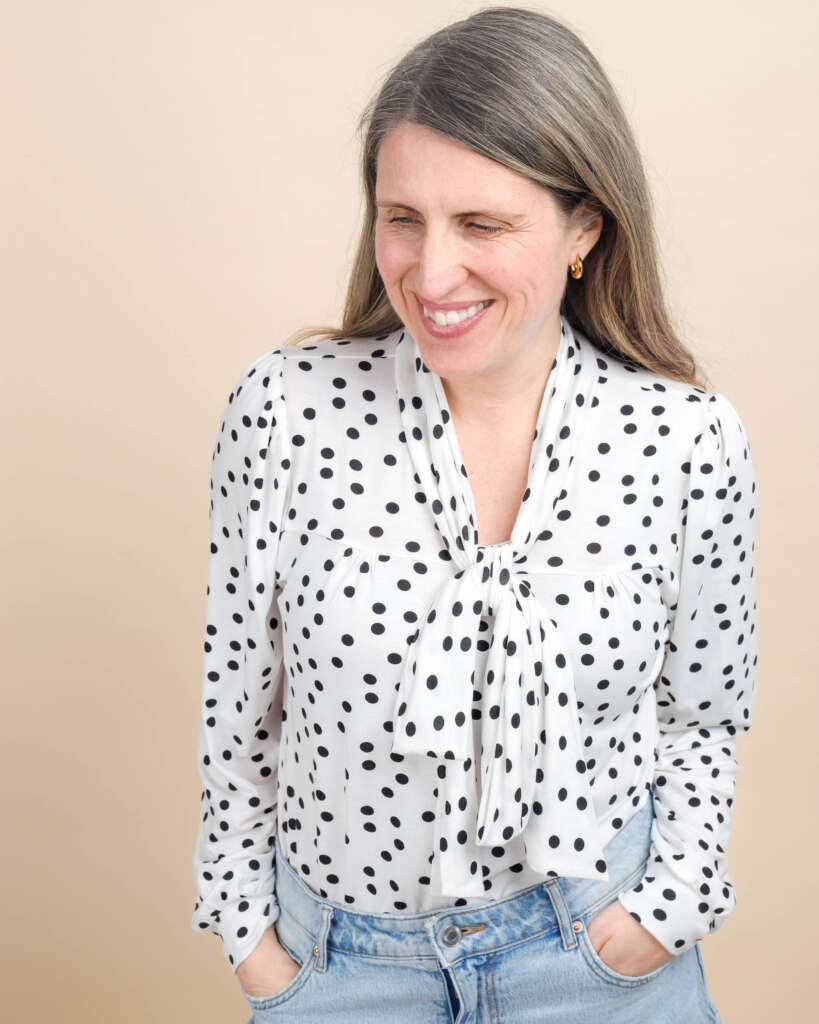
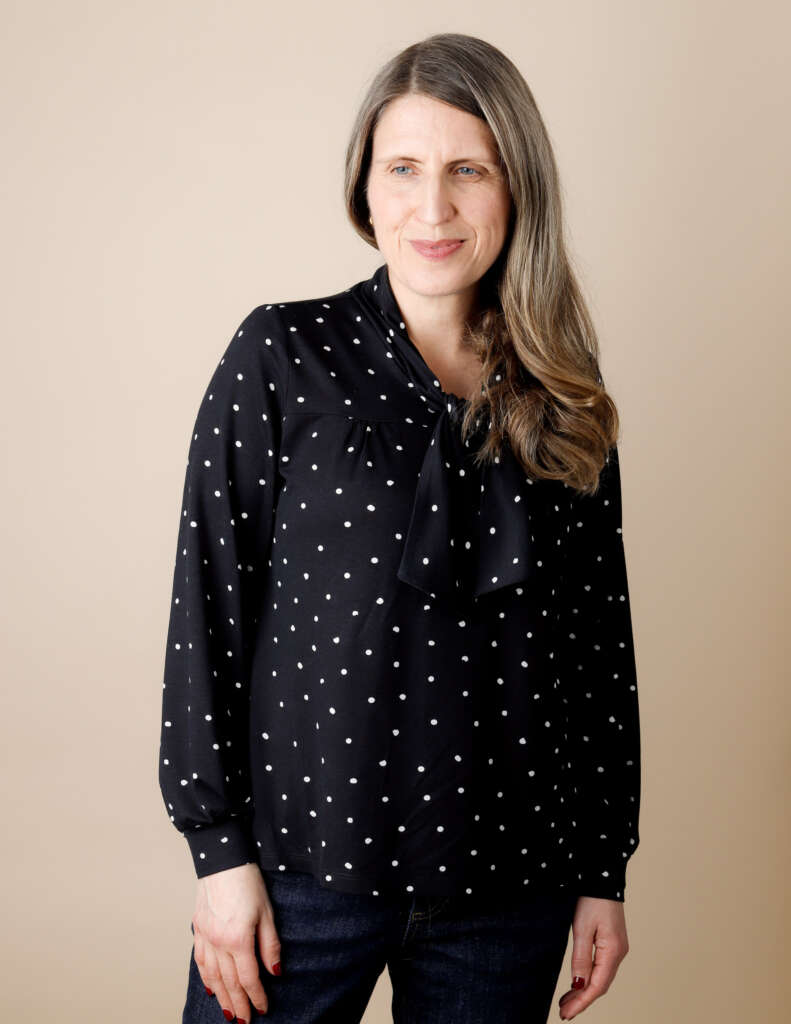
How fabric choice affects the look
Even within suitable fabrics, the result will vary:
- Softer fabrics create a more fluid silhouette (and are a little trickier to sew)
- Slightly firmer fabrics give a more defined shape (and are easier to sew)
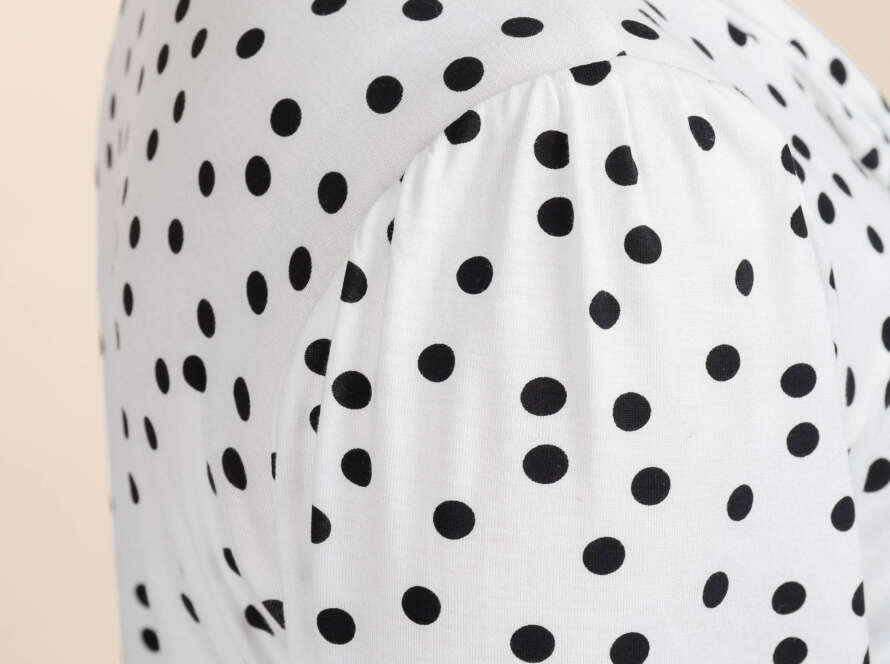
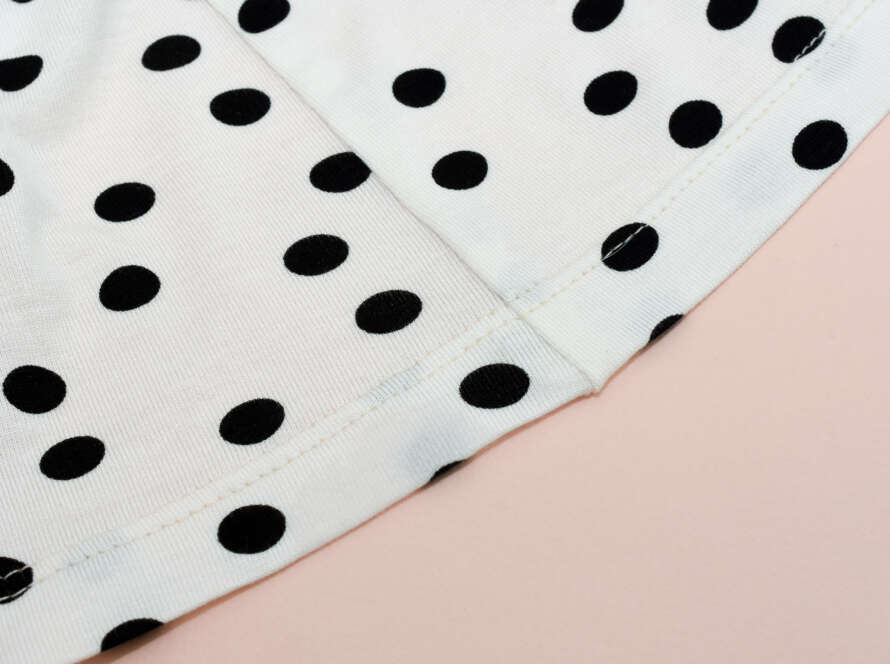
The white polka dot Tyri is sewn in a thin rayon jersey, which drapes beautifully but was definitely trickier to sew than the more stable, firmer rayon mix I used for the black version. And as you can see, the black fabric has a little more body to it and sits slightly away from the body rather than skimming it more closely.
To sum it up
If you’re unsure, avoid the extremes. So, skip the very flimsy or overly heavy fabrics in favour of knits that have both softness and a little stability. Plus, the instructions offer plenty of tips on how to master sewing more intricate details when sewing jerseys and similar knits.