

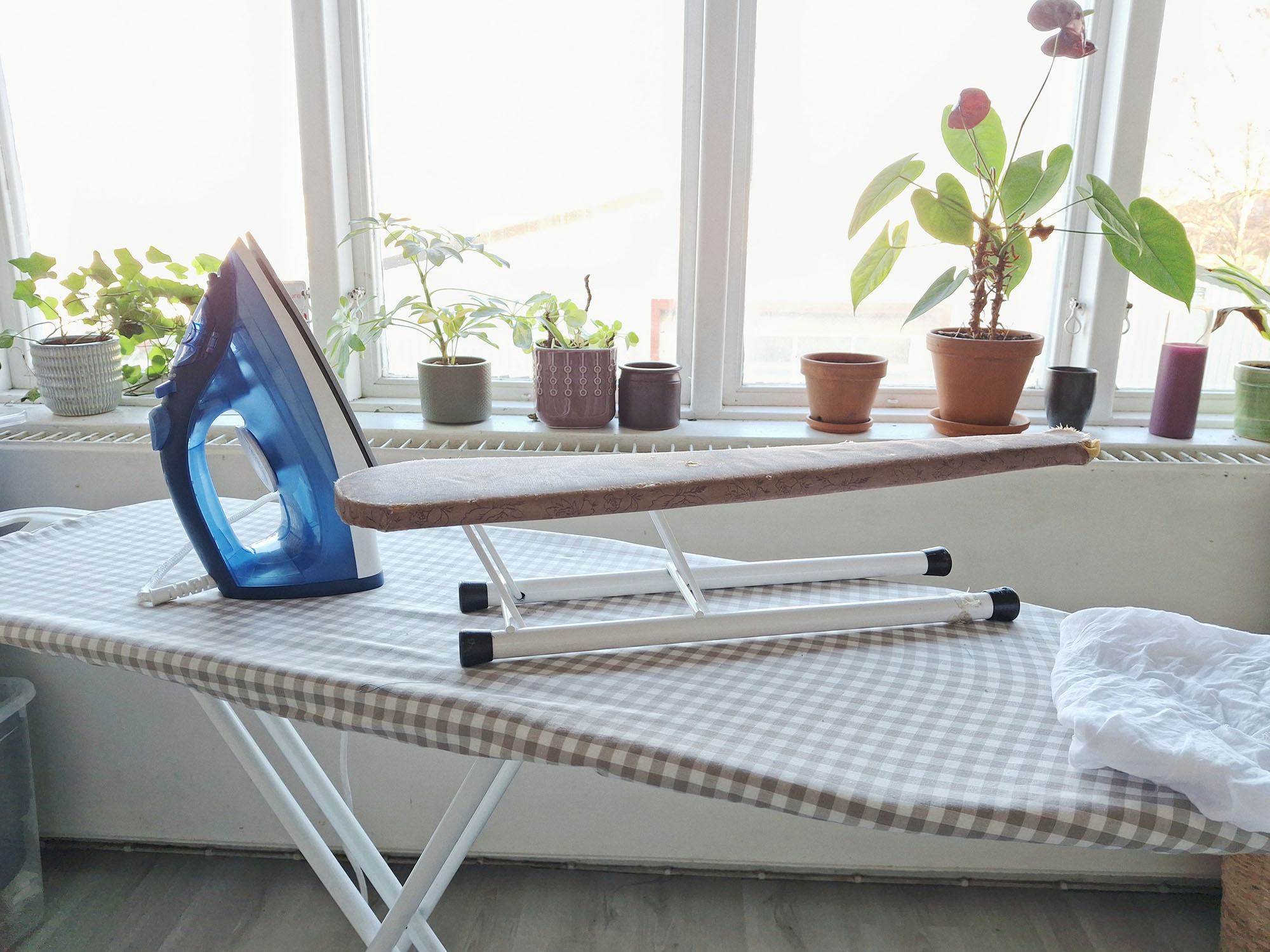
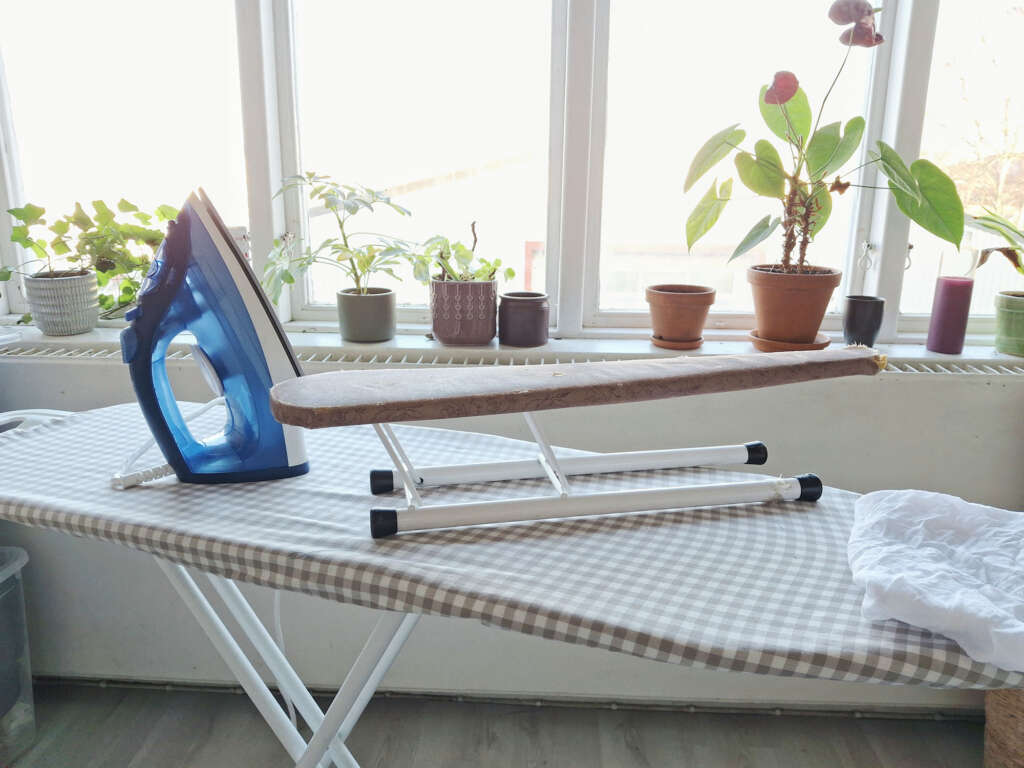
Pressing is one of those sewing steps that can make all the difference in your projects. And the best part? You don’t need to spend a lot or buy fancy tools to get better pressing. With just a few basics (many that you probably already have), you’ll see a big improvement in your results. So let’s take a look at which pressing equipment you actually need.
This post includes Amazon affiliate links, meaning I will receive a commission on some purchases on clicked links.
Good quality iron with built-in steam
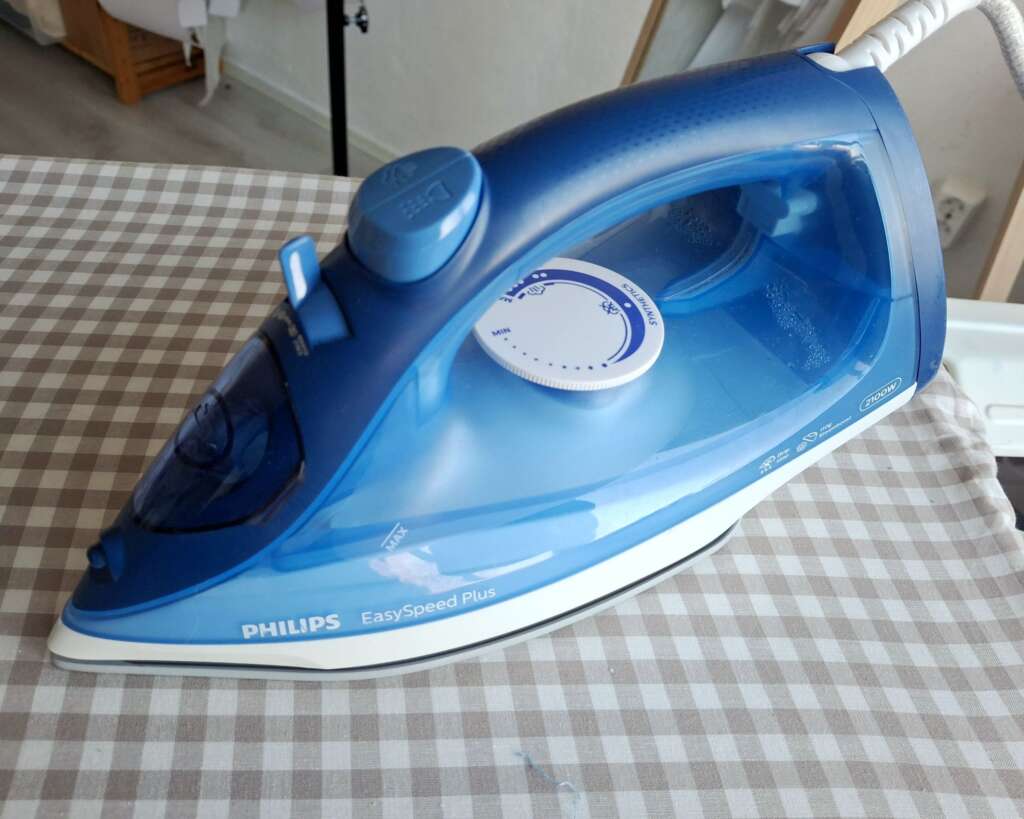
If you are looking for a new iron, check both the reviews and the technical specs. As sewists, I think we should ask a bit more from our iron compared to a casual user. My regular iron is a Philips Easy Speed Plus (Amazon affiliate link). I think it is pretty good with a solid build and most of the functions I want, but I would not say it is amazing.
Key features when buying an iron
- A steam lever so that you can turn the steam on and off
- A steam boost button, pressing the boost button can really melt away the wrinkles if the iron is good. Look for an iron that has plenty of power (watts), those do a better job with the steam boosting.
- A long enough cord (a pet peeve of mine is a short cord)
- A water spray option (not necessary, but nice to have)
- Built-in calc cleaner. Mine has this, but I think it could do the job better
- Auto turn-off when not used. My iron lacks this function, which is the biggest letdown.
- Easy to clean plate. This is huge, because sometimes accidents do happen (i.e. fusible interfacing glue, gah!).
- Vertical steam function. Nice to have if you are shaping your garment on a dress dummy or a hanger.
Sleeve ironing board
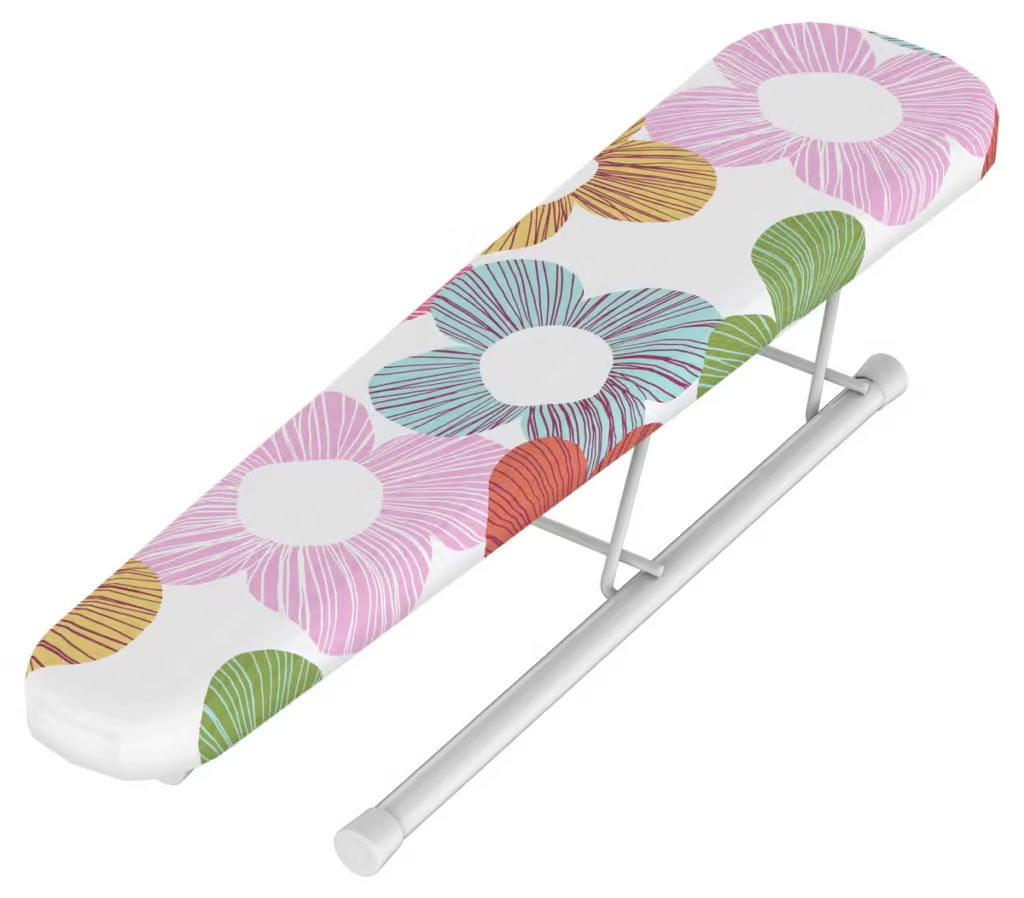
If you don’t have this one, get it asap! It’s the best thing since sliced bread, honestly. A sleeve pressing board is a small, narrow pressing board designed for ironing tiny, hard-to-reach areas. It is commonly used for sleeves, cuffs, trouser legs, and any tubular or narrow area. Because it is so small, it can also work as a nifty substitute for a big board if you are crammed for space when sewing.
Sleeve pressing boards (Amazon affiliate link)
Tailors ham
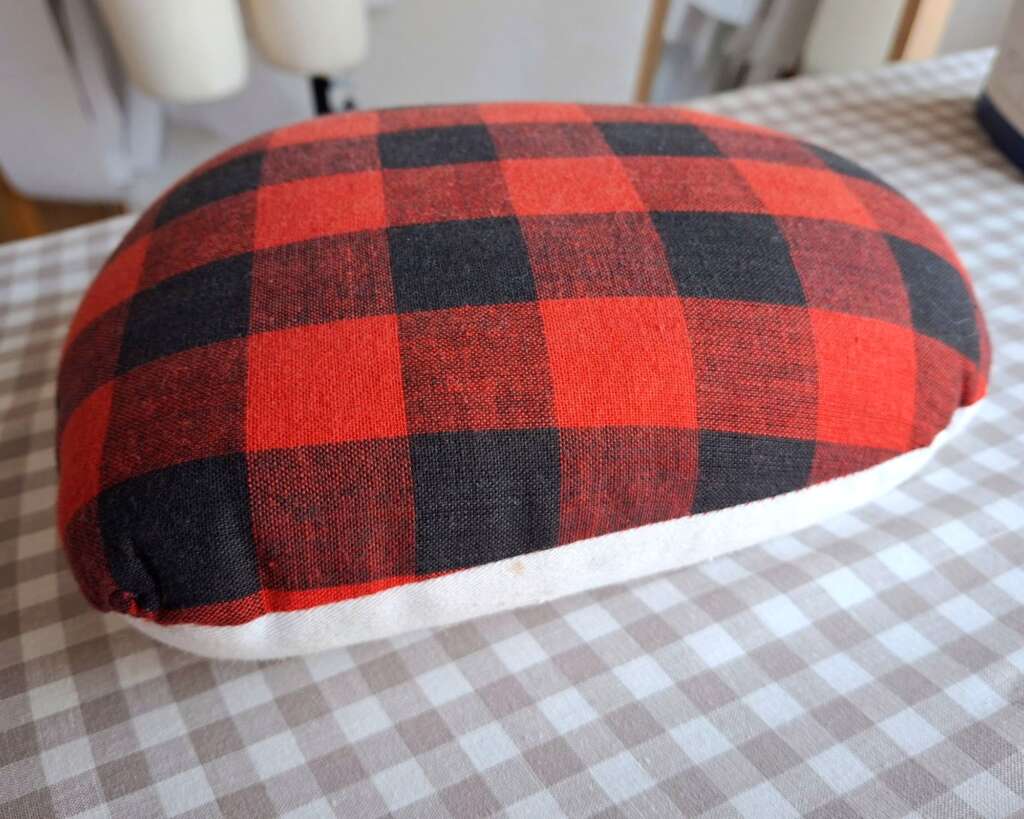
A tailor’s ham is a firm, curved pressing tool that helps shape and press curved areas of a garment, like sleeves, darts, crotch seams, and other tricky details that aren’t flat. Mine is filled with sawdust, which holds heat and absorbs steam, making it easier to set fabric into shape. I waited way too long to get mine, and now I can’t imagine pressing without it.
Tailor’s hams (Amazon affiliate link)
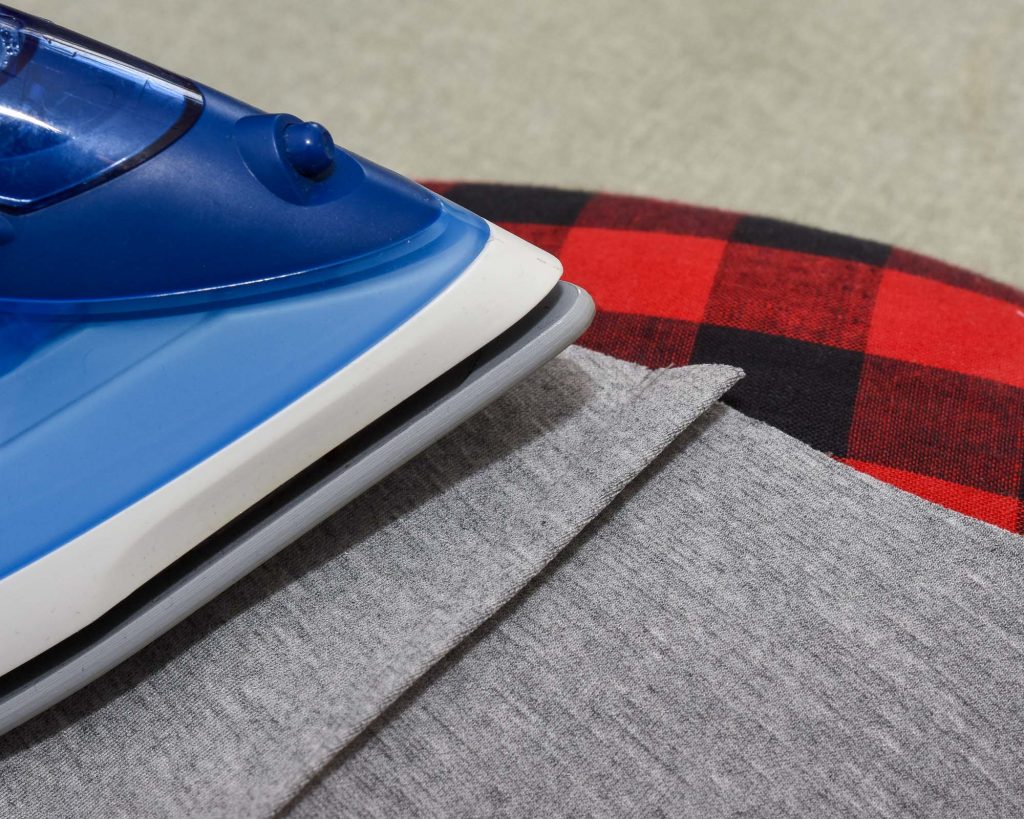
Plug-in timer
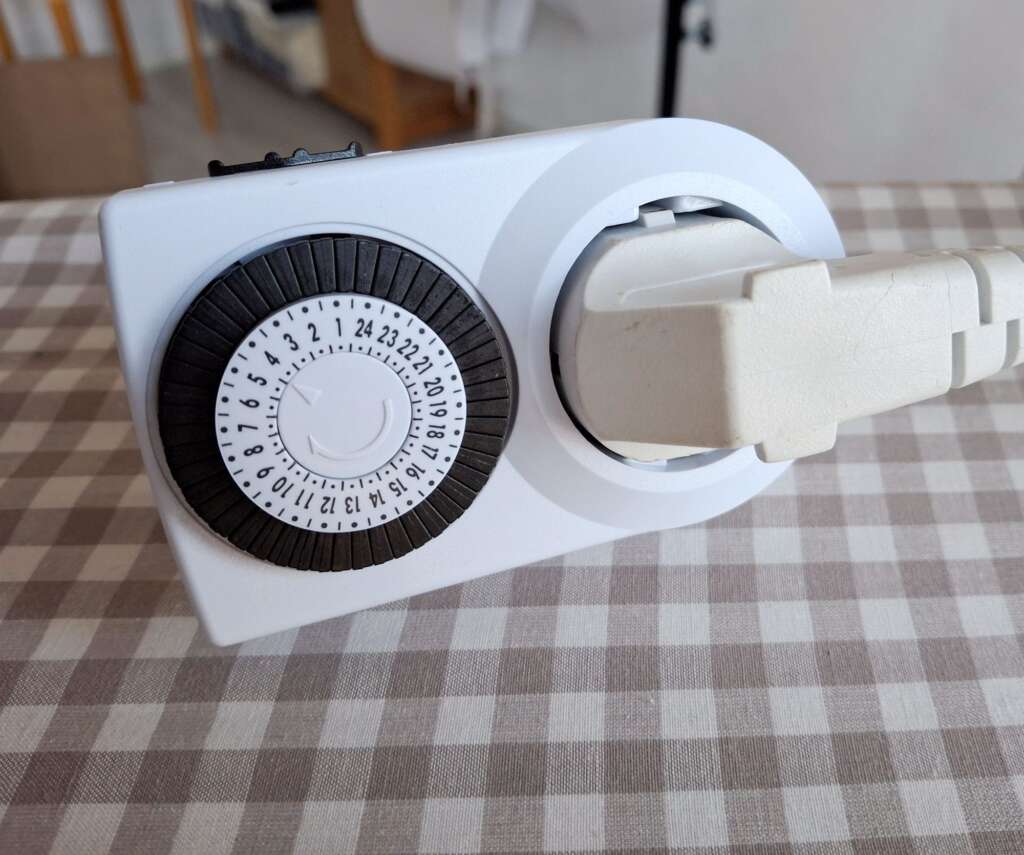
A plug-in timer can literally save lives if your iron doesn’t turn off automatically. You plug the timer into the wall outlet, then plug the iron into the timer and set the time. Then it turns the power off automatically after a set time. After a scary incident where I forgot the iron on all night, I went out and bought a timer immediately.
Pressing cloth
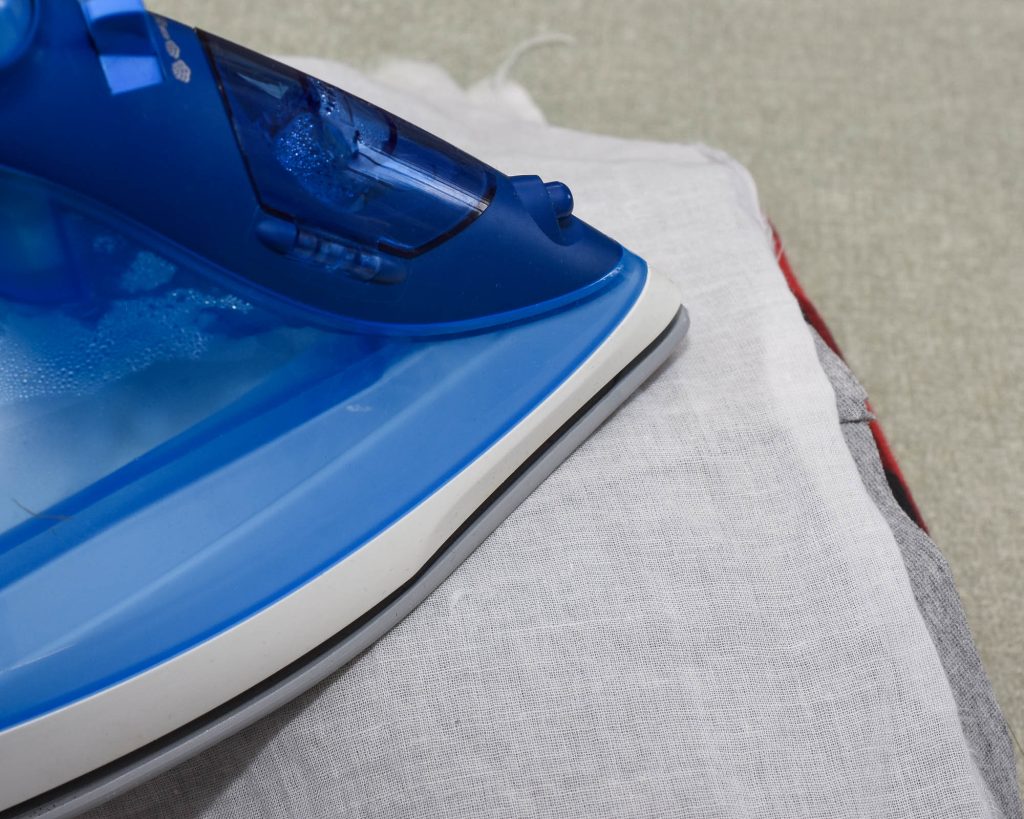
A pressing cloth is an easy way to protect your fabric while ironing. Just place it between your iron and the garment to avoid damage from the heat. It helps prevent shiny marks, scorching, and heat damage, especially on delicate fabrics like silk, wool, and synthetics.
No need to buy a pressing cloth, fabric lovers like us have plenty of options! Any lightweight cotton works. I use cotton muslin now, but old pillowcases or other worn-out household fabrics have worked really well for me, too.
Potentially awesome pressing tools (that I have yet to try)
Clapper and point pressers
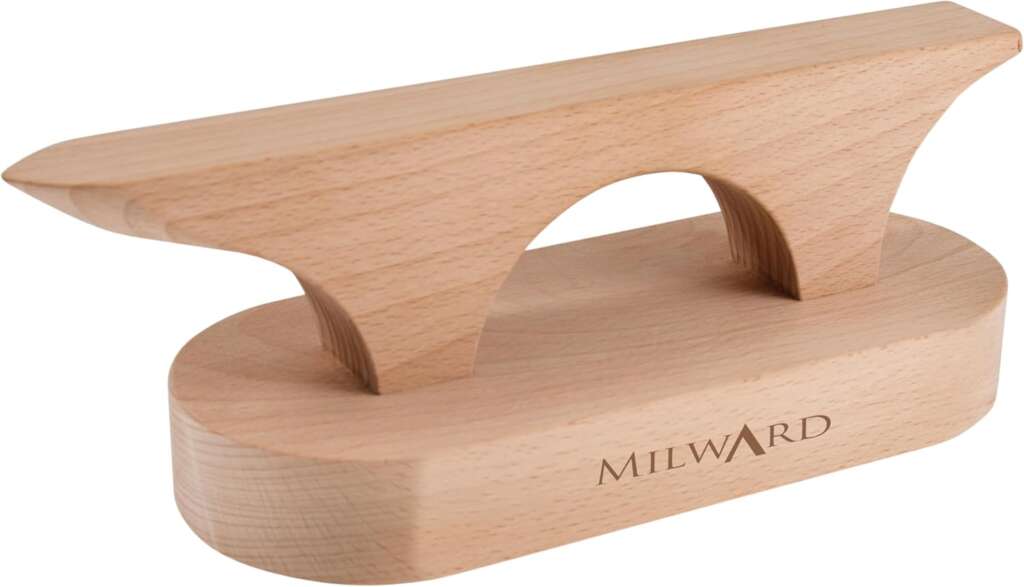
Clapper
A clapper is a wooden pressing tool used to set seams. After applying steam with an iron, the clapper is pressed firmly onto the hot fabric and left in place until the area cools. The wood absorbs moisture while the pressure locks the fibres into position. I imagine it being great for any projects made with natural fibres such as wool and cotton.
Clappers (Amazon affiliate link)
Point presser
A point presser is a similar pressing tool designed for detailed areas that are difficult to press flat on an ironing board. It typically has a pointed end for corners and a narrow edge for seams. Point pressers are used for collars, lapels, cuffs, pocket flaps, plackets, and any area with sharp angles or layered fabric. Again, this sounds like a great tool to have if you want to splurge a bit.
Point pressers with clappers (Amazon affiliate link)
Nice to have pressing tools, but not necessary
Steam generator station
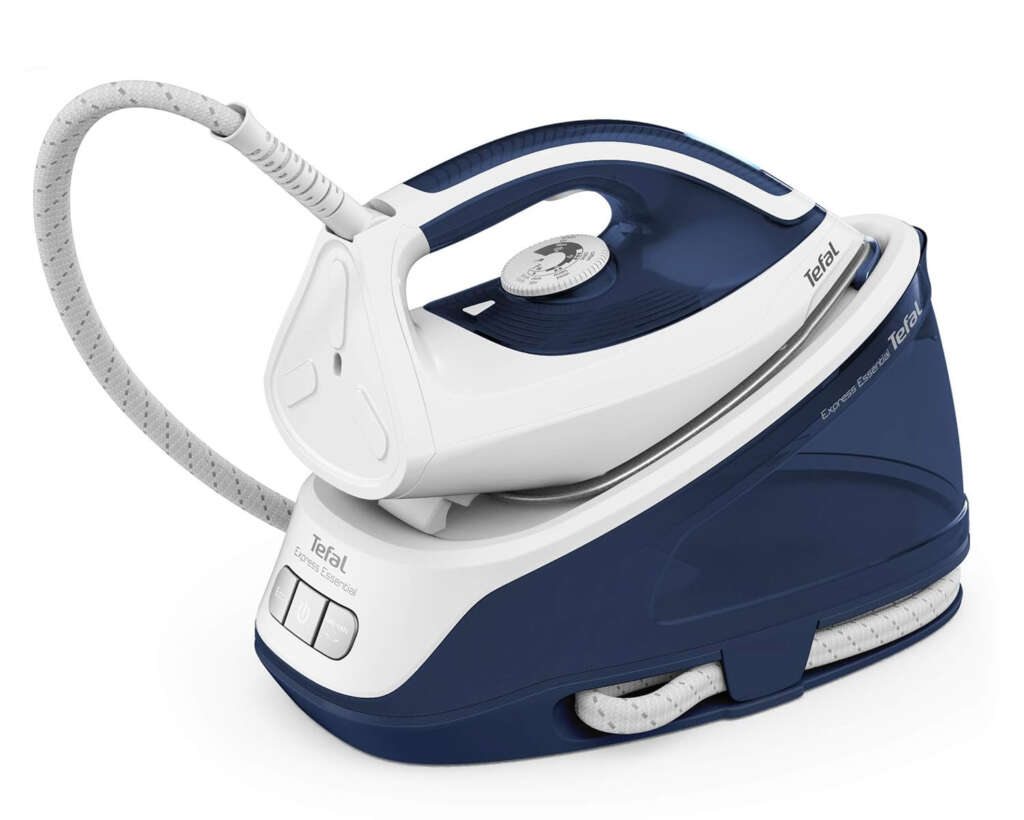
I love my steam station; it basically melts away wrinkles. But I actually don”t have it in my sewing studio. Instead, I have it back home and use it to iron my finished clothes. However, it’s definitely a splurge, so not an essential purchase in my humble opinion. Mine is from Tefal, but lots of brands have steam stations (Amazon affiliate link)
Hand-held steamer
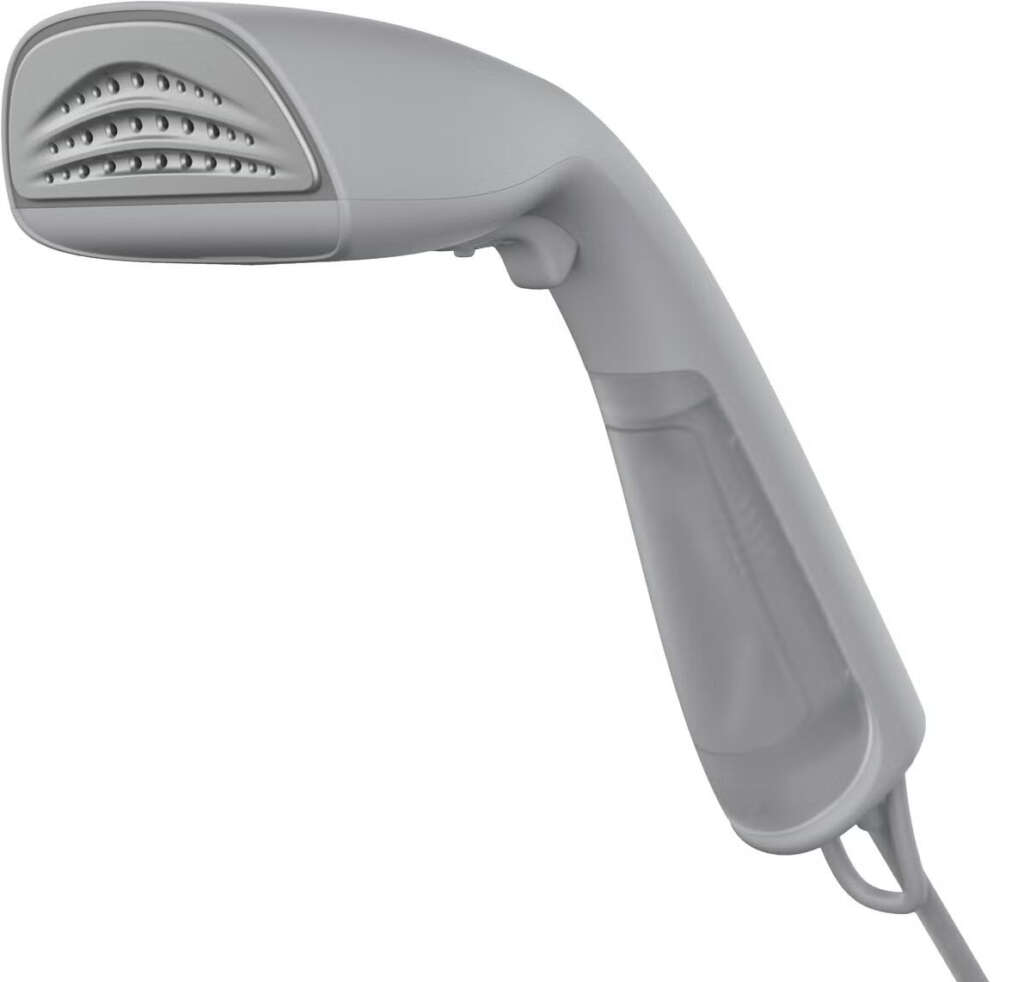
I recently bought my first hand-held steamer, mostly to use when photographing my sewing patterns. I bought the Electrolux Refine 700n steamer, and it is pretty good, but I’m not blown away. It is not a replacement for an iron, that’s for sure. But it’s quick and easy to use, and I don’t regret the purchase.
Focus on the basics
You don’t need every gadget for good pressing, just the right basics. A reliable iron and one or two shaping tools, like a sleeve board or tailor’s ham, will improve your results without breaking the bank, in my humble opinion. Pressing is a skill, and the right tools just make it easier.

2 Comments
Gillian Whaites
I fully recommend getting a Wooden clapper when ironing garments and quilts. It’s a game changer. My 100% pure silk pressing cloth is wonderful too asis a “ham”.
Carol in Denver
A holder for the pressing ham is essential, to hold the ham in place while its various curves are used. You can buy holders but I use a carpenter’s old miter box. Seam rolls of various lengths are so helpful and can be made from cardboard tubes, cans or fat rope covered with thick wool coating. Pressing cloths can be silk organza, not any other kind of silk fabric. Make a dauber of tightly rolled wool (whip-stitch it closed) and dip it in water to run along seams before pressing them open. My “ironing board” is an 18″ x 48″ chrome shelving unit with padded plywood top which to me is much more useful than a regular ironing board. I don’t have a modern steam iron; I use vintage irons with no holes. I figure if it was good enough for Chanel, it is good enough for me.
Comments are closed.